Causes-
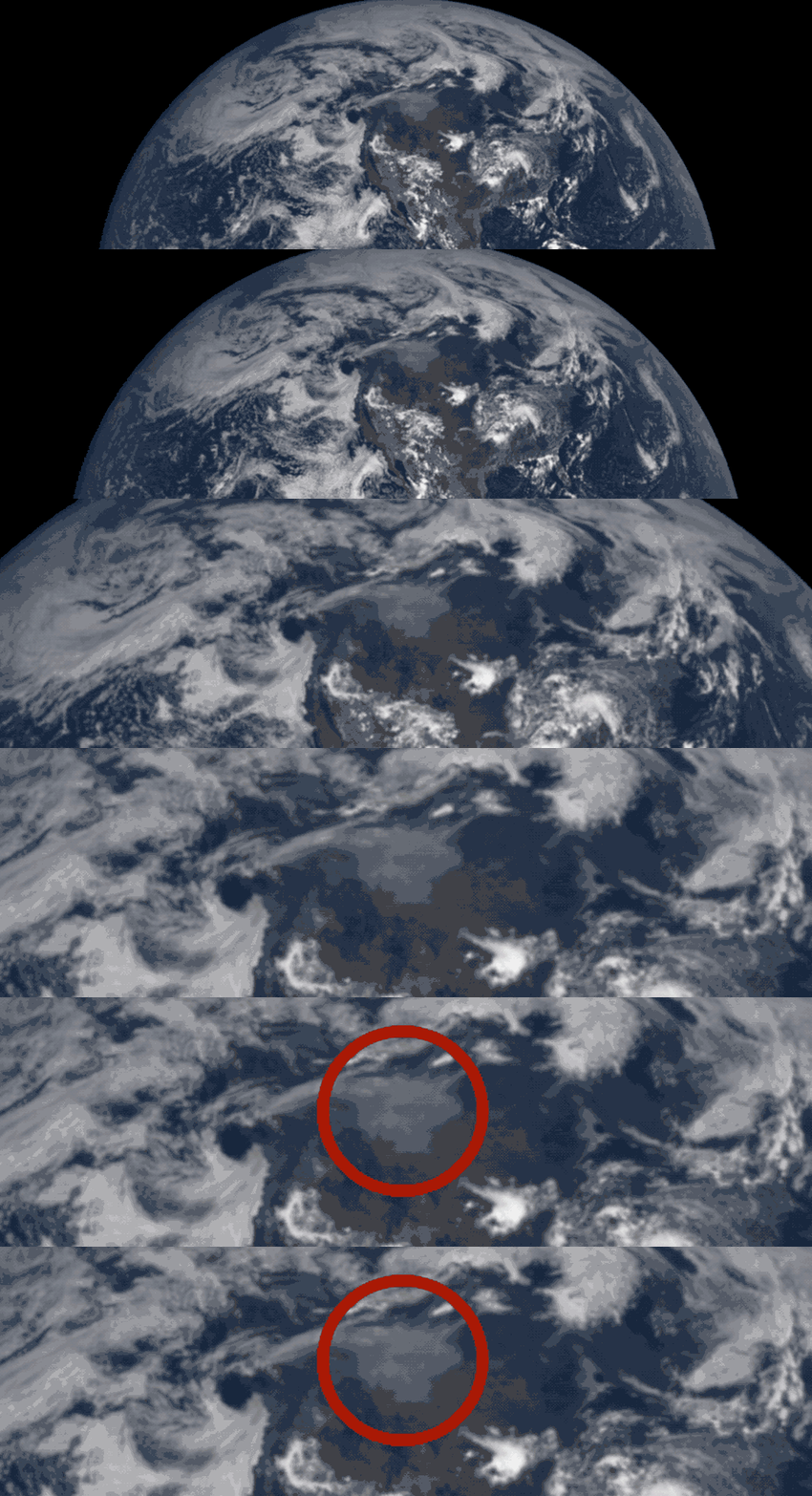
On Earth, the common weather phenomena include wind, cloud, rain, snow, fog and dust storms. Less common events include natural disasters such as tornadoes,hurricanes, typhoons and ice storms. Almost all familiar weather phenomena occur in the troposphere (the lower part of the atmosphere). Weather does occur in the stratosphere and can affect weather lower down in the troposphere, but the exact mechanisms are poorly understood.
Weather occurs primarily due to air pressure (temperature and moisture) differences between one place to another. These differences can occur due to the sun angle at any particular spot, which varies by latitude from the tropics. In other words, the farther from the tropics one lies, the lower the sun angle is, which causes those locations to be cooler due to the indirectsunlight. The strong temperature contrast between polar and tropical air gives rise to the jet stream. Weather systems in the mid-latitudes, such as extratropical cyclones, are caused by instabilities of the jet stream flow (see baroclinity). Weather systems in the tropics, such as monsoons or organized thunderstorm systems, are caused by different processes.
Because the Earth's axis is tilted relative to its orbital plane, sunlight is incident at different angles at different times of the year. In June the Northern Hemisphere is tilted towards the sun, so at any given Northern Hemisphere latitude sunlight falls more directly on that spot than in December (see Effect of sun angle on climate). This effect causes seasons. Over thousands to hundreds of thousands of years, changes in Earth's orbital parameters affect the amount and distribution of solar energy received by the Earth and influence long-term climate. (See Milankovitch cycles).
The atmosphere is a chaotic system, so small changes to one part of the system can grow to have large effects on the system as a whole. This makes it difficult to accurately predict weather more than a few days in advance, though weather forecasters are continually working to extend this limit through the scientific study of weather, meteorology. It is theoretically impossible to make useful day-to-day predictions more than about two weeks ahead, imposing an upper limit to potential for improved prediction skill.
Weathering-
Weathering is the breaking down of rocks, soil and minerals as well as artificial materials through contact with the Earth's atmosphere, biotaand waters. Weathering occurs in situ, roughly translated to: "with no movement" , and thus should not be confused with erosion, which involves the movement of rocks and minerals by agents such as water, ice, snow, wind, waves and gravity and then being transported and deposited in other locations.
Two important classifications of weathering processes exist – physical and chemical weathering; each sometimes involves a biological component. Mechanical or physical weathering involves the breakdown of rocks and soils through direct contact with atmospheric conditions, such as heat, water, ice and pressure. The second classification, chemical weathering, involves the direct effect of atmospheric chemicals or biologically produced chemicals also known as biological weathering in the breakdown of rocks, soils and minerals.[1] While physical weathering is accentuated in very cold or very dry environments, chemical reactions are most intense where the climate is wet and hot. However, both types of weathering occur together, and each tends to accelerate the other. For example, physical abrasion (rubbing together) decreases the size of particles and therefore increases their surface area, making them more susceptible to rapid chemical reactions. The various agents act in concert to convert primary minerals (feldspars and micas) to secondary minerals (clays and carbonates) and release plant nutrient elements in soluble forms.
The materials left over after the rock breaks down combined with organic material creates soil. The mineral content of the soil is determined by the parent material, thus a soil derived from a single rock type can often be deficient in one or more minerals for good fertility, while a soil weathered from a mix of rock types (as in glacial, aeolian or alluvial sediments) often makes more fertile soil. In addition, many of Earth's landforms and landscapes are the result of weathering processes combined with erosion and re-deposition.
Biometerology-
Weather events influence biological processes on short time scales. For instance, as the Sun rises above the horizon in the morning, light levels become sufficient for the process of photosynthesis to take place in plant leaves. Later on, during the day, air temperature and humidity may induce the partial or total closure of the stomata, a typical response of many plants to limit the loss of water through transpiration. More generally, the daily evolution of meteorological variables controls thecircadian rhythm of plants and animals alike.
Living organisms, for their part, can collectively affect weather patterns. The rate of evapotranspiration of forests, or of any large vegetated area for that matter, contributes to the release of water vapor in the atmosphere. This local, relatively fast and continuous process may contribute significantly to the persistence of precipitations in a given area. As another example, the wilting of plants results in definite changes in leaf angle distribution and therefore modifies the rates of reflection,transmission and absorption of solar light in these plants. That, in turn, changes the albedo of the ecosystem as well as the relative importance of the sensible and latent heat fluxes from the surface to the atmosphere. For an example inoceanography, consider the release of dimethyl sulfide by biological activity in sea water and its impact on atmosphericaerosols.
The methods and measurements traditionally used in biometeorology are not different when applied to study the interactions between human bodies and the atmosphere, but some aspects or applications may have been explored more extensively. For instance, wind chill has been investigated to determine the time period an individual can sustain exposure to given temperature and wind conditions. Another important example concerns the study of airborne allergens (such as pollens andaerosols) and their impact on individuals: weather conditions can favor or hinder the release as well as the transport and deposition of these allergens, sometimes severely affecting the well-being of sensitive populations.

Forecasting-
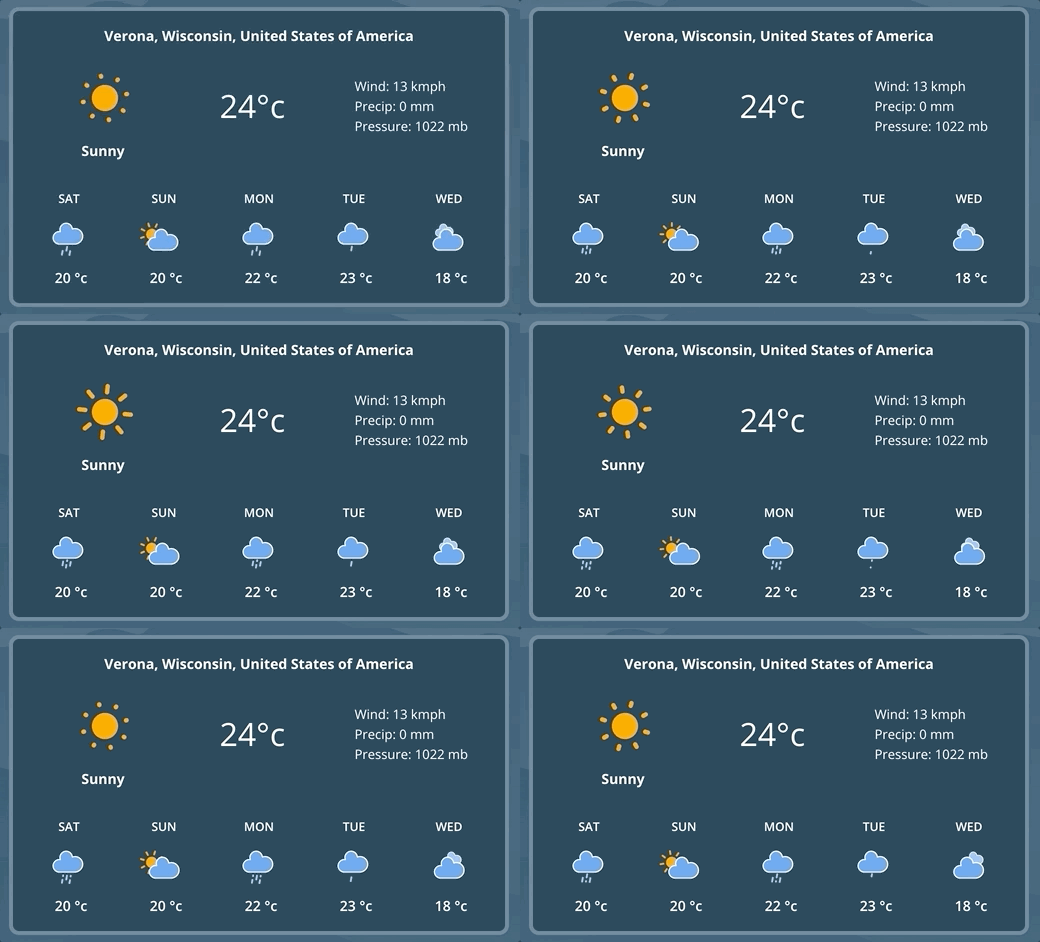
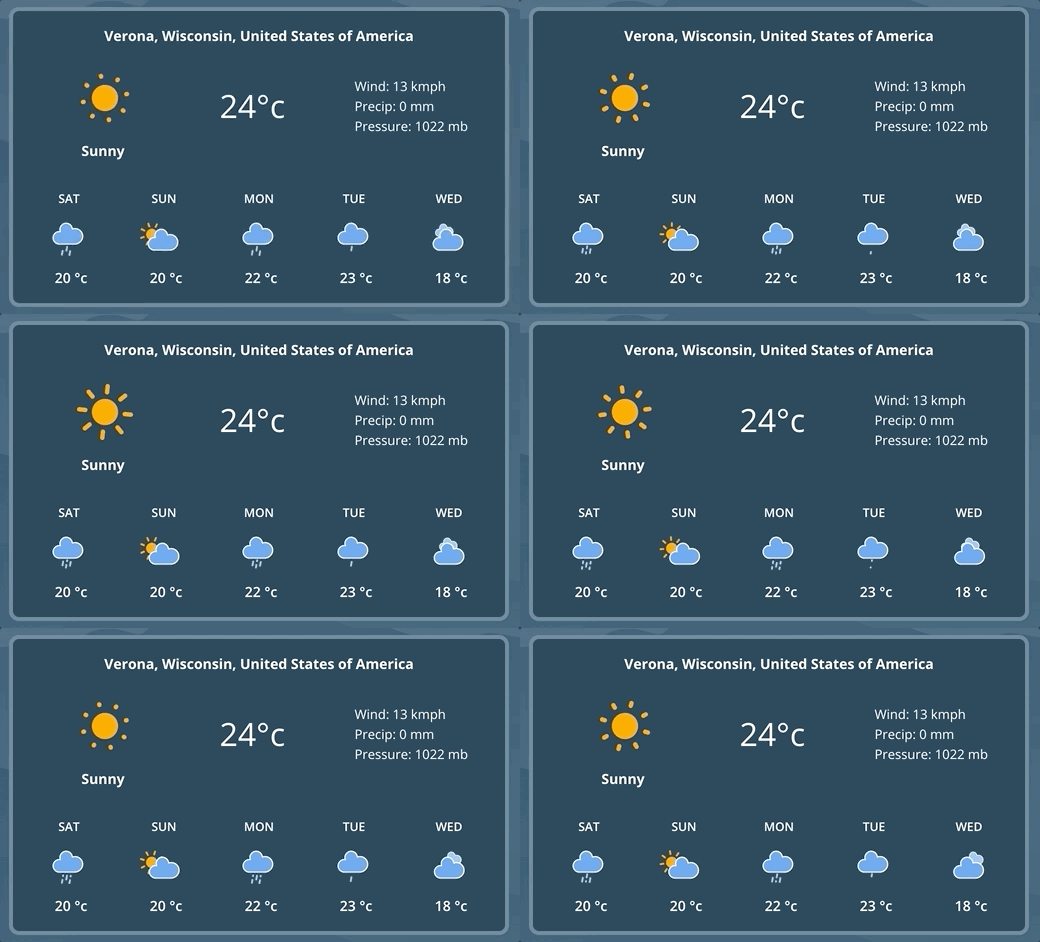
Weather forecasting is the application of science and technology to predict the state of the atmosphere for a future time and a given location. Human beings have attempted to predict the weather informally for millennia, and formally since at least the nineteenth century. Weather forecasts are made by collecting quantitative data about the current state of the atmosphere and using scientific understanding of atmospheric processes to project how the atmosphere will evolve.
Once an all-human endeavor based mainly upon changes in barometric pressure, current weather conditions, and sky condition, forecast models are now used to determine future conditions. Human input is still required to pick the best possible forecast model to base the forecast upon, which involves pattern recognition skills,teleconnections, knowledge of model performance, and knowledge of model biases. The chaotic nature of the atmosphere, the massive computational power required to solve the equations that describe the atmosphere, error involved in measuring the initial conditions, and an incomplete understanding of atmospheric processes mean that forecasts become less accurate as the difference in current time and the time for which the forecast is being made (the range of the forecast) increases. The use of ensembles and model consensus helps to narrow the error and pick the most likely outcome.
There are a variety of end users to weather forecasts. Weather warnings are important forecasts because they are used to protect life and property. Forecasts based on temperature and precipitation are important to agriculture, and therefore to commodity traders within stock markets. Temperature forecasts are used by utility companies to estimate demand over coming days. On an everyday basis, people use weather forecasts to determine what to wear on a given day. Since outdoor activities are severely curtailed by heavy rain, snow and the wind chill, forecasts can be used to plan activities around these events, and to plan ahead and survive them.
Extraterrestrial within solar system-
Studying how the weather works on other planets has been seen as helpful in understanding how it works on Earth. Weather on other planets follows many of the same physical principles as weather on Earth, but occurs on different scales and in atmospheres having different chemical composition. The Cassini–Huygensmission to Titan discovered clouds formed from methane or ethane which deposit rain composed of liquid methane and other organic compounds. Earth's atmosphere includes six latitudinal circulation zones, three in each hemisphere. In contrast, Jupiter's banded appearance shows many such zones, Titan has a single jet stream near the 50th parallel north latitude, and Venus has a single jet near the equator.
One of the most famous landmarks in the Solar System, Jupiter's Great Red Spot, is an anticyclonic storm known to have existed for at least 300 years. On other gas giants, the lack of a surface allows the wind to reach enormous speeds: gusts of up to 600 metres per second (about 2,100 km/h or 1,300 mph) have been measured on the planet Neptune. This has created a puzzle for planetary scientists. The weather is ultimately created by solar energy and the amount of energy received by Neptune is only about 1⁄900 of that received by Earth, yet the intensity of weather phenomena on Neptune is far greater than on Earth. The strongest planetary winds discovered so far are on the extrasolar planet HD 189733 b, which is thought to have easterly winds moving at more than 9,600 kilometres per hour (6,000 mph).
Space Weather-
For many centuries, the effects of space weather were noticed but not understood. The aurora have long been admired by people living at high latitudes. Navigators in the Middle Ages in Europe using a lodestone as a magnetic compass noted that occasionally the stone's direction was regularly deflected from magnetic north over the course of a day. This seems to have been first discovered by George Graham and reported in published form in 1724, but the effect was not attributed to overhead electric currents, in what we now recognize as the ionosphere and magnetosphere, until Balfour Stewart in 1882. This theory was subsequently confirmed by Arthur Schuster in 1889, using mathematical analysis of magnetic observatory data. Space weather affected the first electrical telegraphs in the 1840 in various areas at various times. The great solar storm of 1859 disrupted telegraph operations around the world, which was covered in many major newspapers at that time.Richard Carrington correctly connected the disruption with a solar flare observed the day before and a great deflection of the Earth's magnetic field (or geomagnetic storm) simultaneous with the telegraph disruption. With this connection, space weather, as we now know it, became a subject of academic research within the study of solar physics. Kristian Birkelandexplained the physics of aurora by creating artificial aurora in his laboratory and predicted the solar wind. With the introduction of radio for commercial and military uses, it was noted that periods of extreme static or noise occurred. Severeradar jamming during a large solar event in 1942 led to the discovery of solar radio bursts (radio waves which cover a broad frequency range created by a solar flare), another aspect of space weather.
In the 20th century, the interest in space weather has expanded as military and commercial systems have come to depend on systems affected by space weather. Communications satellites are a vital part of global commerce. Weather satellitesystems provide information about terrestrial weather. The signals from satellites of the Global Positioning System are used in a wide variety of commercial products and processes. Space weather phenomena can interfere with or damage these satellites or interfere with the radio signals to and from these satellites. Space weather phenomena can cause damaging surges in long electrical transmission lines and expose passengers and crew of aircraft travel to radiation, especially on polar routes.
The term space weather came into usage in the 1990s when it became apparent that the impact of the space environment on human systems demanded a more coordinated research and application framework. The purpose of the National Space Weather Program in the USA is to focus research on the needs of the commercial and military communities which are affected by space weather, to connect the research community to the user community, to create coordination between operational data centers and to create better definitions of what the user community needs are. The concept was turned into an action plan in 2000, an implementation plan in 2002, an assessment in 2006 and a revised strategic plan in 2010. A revised action plan will be released in 2011 and a revised implementation plan will be release in 2012. One part of the National Space Weather Program is to make users aware that space weather affects their business. Private companies now acknowledge space weather "is a real risk for today's businesses".
